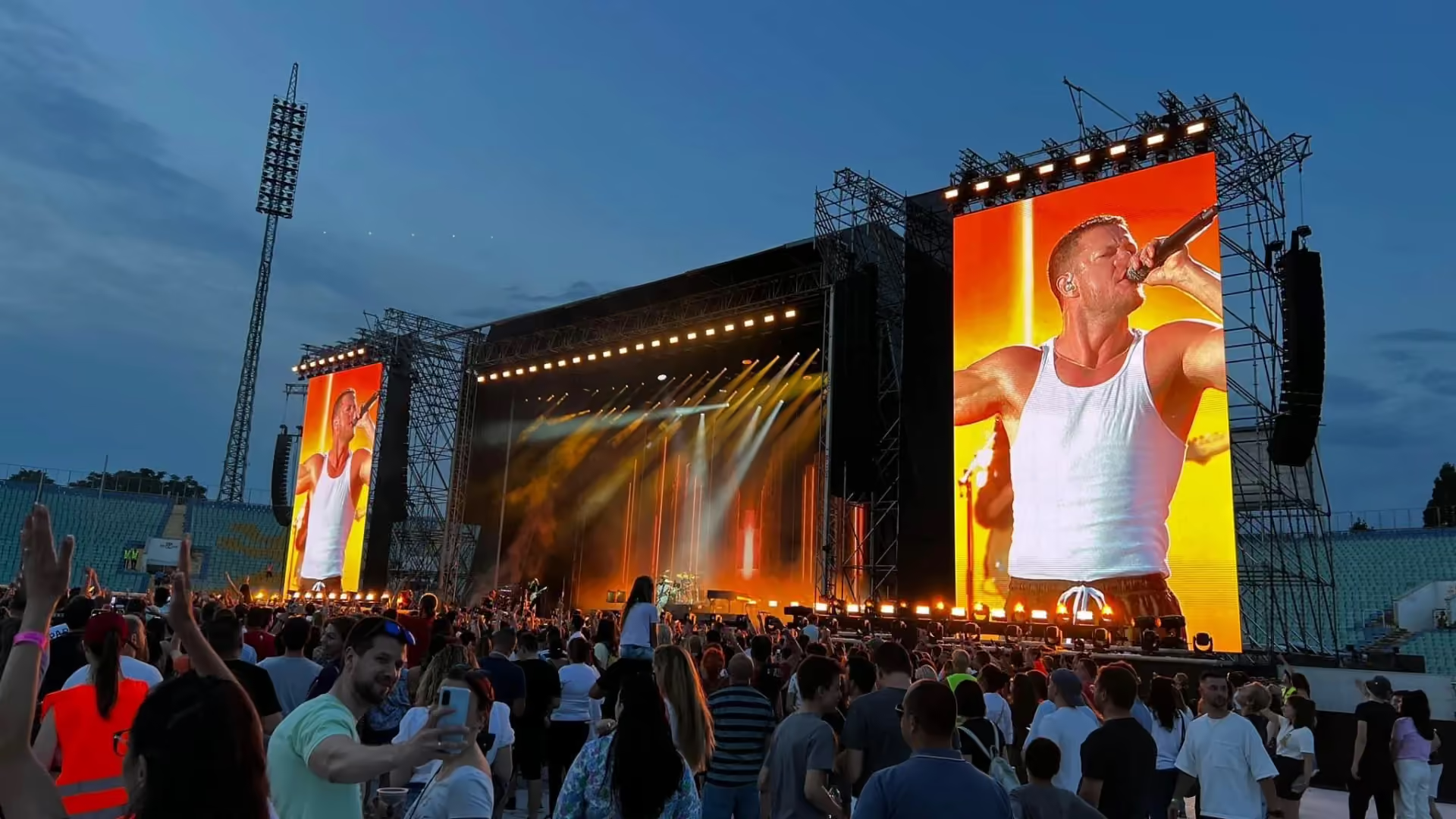
Outdoor LED screens
Outdoors, a screen has no allies. The July sun tries to outshine it, January ice tries to crack it, the wind pulls at the structure and the rain looks for a gap to the electronics. And all that time the screen has one job: to be seen from the street better than anything around it.
We build outdoor screens that take this for years - including in municipalities in the Rhodope mountains, where winter is long and hard.
Brightness 5000+ cd/m² · IP65 · In-house installation and service · 50-month warranty
From Rhodope snow to sea salt
The most honest test of an outdoor screen is not in the catalogue but on the map. Our screens work for the municipalities of Dospat, Lovech, Banite, Laki, Chepelare and Etropole - towns where winter means snow, ice and sub-zero temperatures for weeks. A municipal contract means something else too: acceptance reports, warranty obligations and equipment that is checked by a committee, not by a brochure.
At the other extreme are Nessebar and Sunny Beach, where our screens work in the most corrosive environment Bulgaria has: humidity and salt in the air all year round. Salt is a more patient enemy than rain - it does not break through, it eats away: contacts, fixings, every uncovered metal surface. A screen that lasts for years on the coast has passed a test no laboratory simulates honestly.
Mountains and sea together mean one thing: the same panels, the same installation and the same service work for your facade, totem or boulevard-facing screen too - wherever the site is.


“The screens we sell advertising on are our production tool - if a screen goes dark, we lose a client. With KVANT we are in The Mall, Business Park Sofia (3 outdoor totems), Delta Planet Varna, Mega Mall and Mall Plaza Plovdiv - 250 m² in total. In the first week after the big wall was installed, a faulty module appeared 14 metres up - they replaced it on the fourth day, at night, from a cherry picker; for a screen at that height, that is fast. Since 2023 all of them have run campaigns every day.”
The sun is the competition
A July afternoon, a south-facing facade. The sun hits the screen directly - and a cheap screen turns into a dark rectangle that passers-by take for switched off. The owner has paid for it, the power is on, and from the street - nothing.
An indoor screen mounted outside “because it was cheaper” is exactly that: a dark rectangle with a warranty.
Outdoors, against direct sun, you need 5000+ cd/m² - four to six times more than an indoor screen. That is why our first question on an outdoor project is which way the facade faces: south and west need the maximum; north is more forgiving.
And the other side of it: at night the same screen has to dim, so it does not dazzle - and does not get you into trouble with the neighbours and the municipality. Our systems control brightness automatically, by light sensor and by schedule.


Rain does not ask about the warranty
30-40% of long-term failures in outdoor screens are not in the LEDs but in moisture - getting in through a cheap cabinet, weak seals or careless installation of the cable entries. Water does not damage a screen dramatically and at once; it corrodes slowly, for months, and the damage only shows when it is already big.
That is why, with us, an outdoor screen means:
- IP65 protection - dust and rain under pressure, not “splashes”.
- Cable entries sealed during installation - the most common gap is not in the panel but in the hole the power comes in through.
- Protection against salt air for coastal sites - covered contacts and corrosion-resistant fixings. Rain breaks through; salt eats away. We know the difference because our screens work in Nessebar and Sunny Beach.
- Ventilation/cooling to suit the orientation - a south facade in August is a thermal test that cheap boxes fail.
- A structure sized for wind - the steel is calculated for the specific site, not taken from “whatever is available”.
And because outdoors a failure always comes in the worst possible season: our warranty is carried out in Sofia, with parts in stock - not with shipments to China.


Before you buy: is the screen allowed to light up there?
The most expensive mistake with an outdoor screen is not technical. It is buying and installing a screen that you are then not allowed to switch on.
An outdoor screen showing advertising falls under the advertising ordinance of the municipality in question - and these ordinances differ substantially from town to town. Some municipalities restrict digital advertising in central zones, others require approval of brightness and content, others have zones with a complete ban. The same screen that gets approved within weeks in one town may be impossible in the next. An example: the ordinance on advertising activity in Sofia Municipality (in Bulgarian).
What this means in practice:
- Check the rules before the purchase, not after it. A seller who has not asked you exactly where the screen will stand and has not mentioned the word “permit” has not sold you a solution - they have sold you a risk.
- Orientation and position matter. A screen facing your own car park and a screen facing a boulevard are different cases.
- We have been through this many times - including on municipal projects, where the requirements are strictest. We will brief you on your site in the very first conversation.
What an outdoor LED screen costs
Outdoor screens start from €1 130/m² excl. VAT - including panels, structure, controller, delivery in Sofia, installation, setup and training. The further away the screen is viewed from, the coarser the pitch can be and the lower the price per square metre: a facade facing a boulevard at 20+ metres is done with P8, not P2.5.
Facade facing a street (8-20 m, P5-P8): €1 130-1 350/m² excl. VAT. A real example: a facade 5.12 × 2.88 m, P5 - €19 907 excl. VAT, with everything included.
Look for the same things in any other supplier’s quote - and count them here too.
The exact figure for your size - in the calculator, in a minute.
Questions about outdoor screens
What brightness does an outdoor LED screen need?
For a screen in direct sun - at least 5000 cd/m²; for north-facing facades and shaded spots it can be less. At night the brightness drops automatically, by sensor.
Do you need a permit for an outdoor LED screen?
For a screen showing advertising - yes, under the ordinance of the municipality in question, and the requirements differ from town to town. Check the rules before you buy; we brief you on your site in the very first conversation.
Can an LED screen withstand rain and snow?
A screen with IP65 protection and a properly sealed installation - yes, for years. Our screens work in municipalities such as Chepelare, Dospat and Laki, where winter is long and hard. Most moisture damage comes not from the panels but from carelessly sealed cable entries.
Can an LED screen go by the sea - doesn’t the salt eat it away?
It can, but not just any screen. Salt air corrodes contacts and fixings much faster than rain, so a coastal site needs protected connections and corrosion-resistant fixings from the installation stage. Our screens work in Nessebar and Sunny Beach all year round.
Can an indoor screen go outside under a canopy?
We do not recommend it. A canopy stops rain from above, but not humidity, condensation or sideways rain - and the indoor screen’s brightness still loses the fight with the sun. It comes out cheaper on paper and more expensive in practice.
How much power does an outdoor LED screen use?
More than an indoor one - because of the brightness. That is why energy efficiency counts double here: our drivers, with up to 45% lower consumption than standard panels of the same class - 216-306 W/m² by specification against the usual 350-500 W/m² for the same pitch and brightness - make the biggest difference precisely in outdoor screens with long operating hours.
How long does the structure last?
The steel structure is designed for the specific site and the wind load at that location. Sized correctly, it outlives the screen itself.
Request a quote for an outdoor screen
Tell us where the site is, which way the facade faces and the approximate size. We will tell you what brightness and pitch you need, whether the permit rules have any catches - and what it costs.
Thank you! Your brief has been sent - we'll get back to you.